By the Paramount CDC therapy team · Clinically reviewed by Dr. Ojaswita Sharma, BOT, MOT · 28 October 2026
Short answer: Applied Behaviour Analysis (ABA) is a therapy that uses what we know about how children learn to teach useful skills, such as communication, play, self-care and coping with change, in small, achievable steps. Children are motivated with things they enjoy, and progress is recorded so you can see whether it is working. Good modern ABA is play-based, follows the child’s interests, involves parents closely and respects the child. The number of hours depends on your child’s goals, and works best combined with practice at home.
Key takeaways
- ABA teaches skills by breaking them into small steps and rewarding progress, and it measures results.
- Modern ABA is often play-based and naturalistic. Examples include the Early Start Denver Model for children aged 12 to 48 months, where, according to Children’s Hospital of Philadelphia, parent involvement is key.
- Good ABA does not punish, does not try to stop harmless stimming, and focuses on skills that improve the child’s life.
- ABA works best alongside speech therapy and occupational therapy, under one plan.
- Before you start, ask who designs and supervises the programme, what the goals are, and how progress will be shared with you.
What ABA works on
- Communication: asking for things with words, signs or pictures, instead of crying or pulling
- Play and social skills: taking turns, sharing attention, playing alongside other children
- Self-care: eating, dressing, toileting and hand-washing
- Learning readiness: sitting for short activities, following simple instructions, copying actions
- Coping: handling transitions, waiting, and changes in routine
- Behaviours that cause harm or block learning: understanding why they happen and teaching a better way to meet the same need
Different styles of ABA
| Approach | What it looks like | Often used for |
|---|---|---|
| Discrete trial teaching | Short, structured teaching moments at a table: an instruction, the child’s response, then praise or a reward | Teaching specific new skills step by step |
| Naturalistic approaches (such as pivotal response training and the Early Start Denver Model) | Learning built into play and daily routines, following the child’s interests | Communication, play and social skills, especially in young children |
| Functional behaviour assessment | Observing what happens before and after a behaviour to understand what it achieves for the child | Meltdowns, aggression, self-injury and other behaviours of concern |
Most good programmes mix these, depending on the child and the goal. For more on meltdowns, read tantrum or meltdown: how to tell the difference.
What an ABA session looks like at Paramount
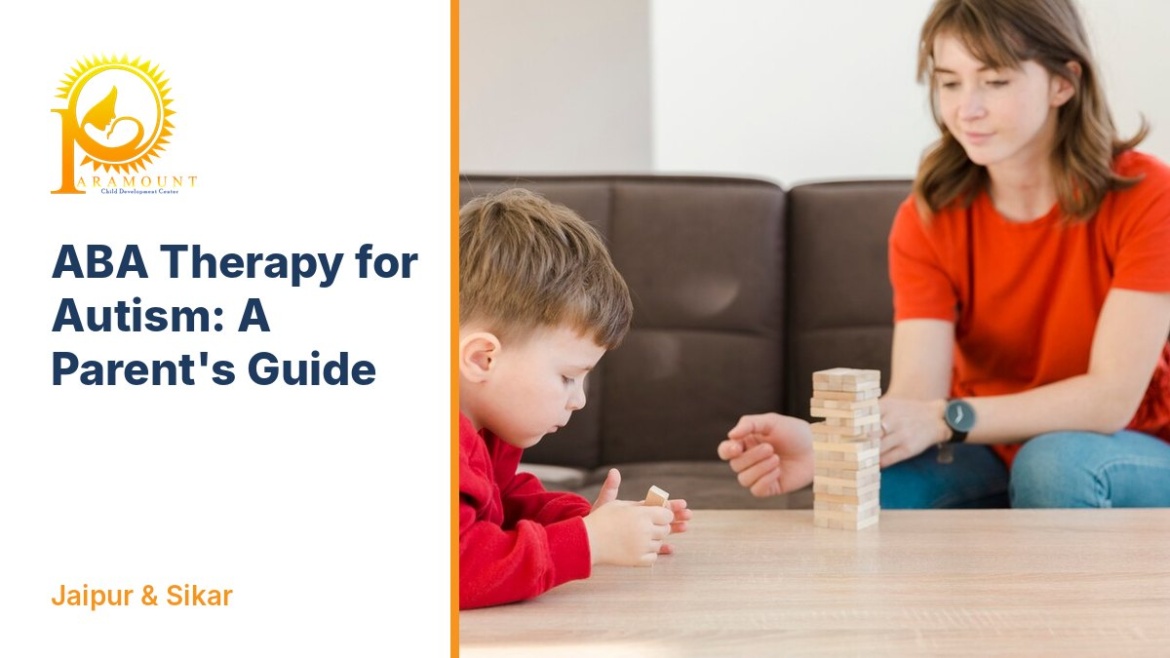
- Warm-up and connection: the therapist starts with play your child enjoys, so therapy feels safe and fun.
- Goal-based activities: two or three goals from your child’s plan are worked on within play and short structured tasks.
- Data recording: the therapist notes how your child responds, so progress is measured, not guessed.
- Parent time: you see what worked and get one or two strategies to use at home that week.
- Regular reviews: goals are reviewed with you and updated as your child learns.
Session length and frequency are set after assessment, based on your child’s needs. Read how we measure progress in autism treatment for more on how reviews work.
How many hours of ABA does a child need?
There is no single right number. Research programmes have used many hours a week. For example, in a well-known trial of the Early Start Denver Model described by Children’s Hospital of Philadelphia, children received 20 hours a week for two years, including 5 hours delivered by parents. In practice, many families combine regular clinic sessions with daily, structured practice at home, which is where much of the learning carries over.
Concerns about ABA, and what good ABA looks like
Some autistic adults have criticised older forms of ABA that focused on compliance, used punishment, or tried to stop harmless behaviours such as hand-flapping. These concerns are worth taking seriously. Good modern ABA:
- uses no punishment, and respects your child’s signs of distress or “no”
- does not try to stop harmless stimming
- chooses goals that matter for your child’s independence and wellbeing, agreed with you
- keeps therapy playful and builds on your child’s interests
- shares data openly and involves parents throughout
Questions to ask before starting ABA
- Who designs and supervises my child’s programme, and what is their training in ABA?
- What are my child’s written goals, and how will progress be measured and shared?
- How will I be trained to continue at home?
- How do you handle challenging behaviour? Do you ever use punishment?
- What is your approach to harmless stimming?
- How will ABA be coordinated with speech therapy and occupational therapy?
Getting help in Jaipur and Sikar
Paramount Child Development Centre offers ABA therapy for children at both of its centres, with the same assessment approach and the same team model: our Durgapura centre in Jaipur, and our Silver Jubilee Road centre in Sikar, which also serves families from Jhunjhunu, Neem Ka Thana and the wider Shekhawati region. Choose the centre closer to home; regular therapy is much easier to keep up when the journey is short.
Read more about ABA therapy in Jaipur and ABA therapy in Sikar. Not sure which therapy your child needs? Start with a child development assessment, available at both centres.
Related reading
Frequently asked questions
Is ABA therapy only for autism?
ABA is most widely used for autism, but the same principles help children with developmental delay, ADHD and other conditions learn skills and manage behaviour.
At what age can ABA therapy start?
ABA can start as early as toddlerhood. Naturalistic programmes such as the Early Start Denver Model are designed for children from 12 to 48 months. Older children and teenagers also benefit, with goals suited to their age.
Is ABA therapy harmful?
Older, compliance-focused forms of ABA have been criticised. Good modern ABA uses no punishment, doesn’t try to stop harmless stimming, respects the child, and focuses on skills that improve quality of life. Ask any provider about their approach before starting.
Can parents do ABA at home?
Parents are an essential part of good ABA. Therapists coach you in specific strategies to use during daily routines, which helps your child use new skills at home, not just in the clinic.
Does my child need an autism diagnosis to start ABA?
No. ABA targets your child’s actual difficulties, such as communication or behaviour, and can begin while any diagnostic process is still under way.
Where can my child get ABA therapy in Jaipur or Sikar?
Paramount Child Development Centre offers ABA therapy, alongside speech therapy, occupational therapy and special education, at its Durgapura centre in Jaipur and its Silver Jubilee Road centre in Sikar. Call or WhatsApp +91 6376 345 510.
Book an ABA assessment in Jaipur or Sikar
Jaipur: 1st Floor, 10 Tonk Road, opposite BMW Showroom, Kailash Puri Colony, Durgapura, Jaipur 302015. Monday to Saturday, 10:00 to 19:30.
Sikar: 2nd Floor, Savigo Tower (above Tanishq & LG Showroom), opposite Police Line, Silver Jubilee Road, Sikar 332001. Monday to Saturday; call for timings.
Book an assessmentCall or WhatsApp: +91 6376 345 510
This article is for general information and does not replace an individual assessment by a qualified professional. If you are worried about your child’s development, health or safety, please speak to a qualified professional or your paediatrician.