By the Paramount CDC therapy team · Clinically reviewed by Dr. Ojaswita Sharma, BOT, MOT · 30 October 2026
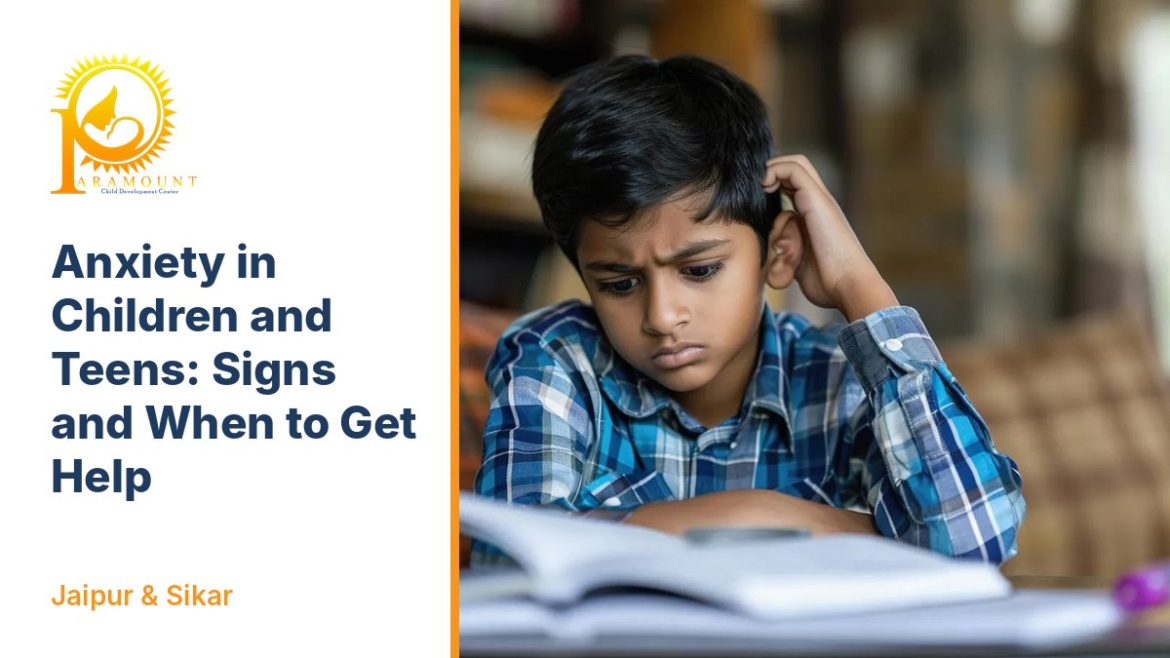
Short answer: Some worry is a normal part of growing up. Anxiety becomes a problem when it is intense, lasts for weeks, and stops a child or teenager from doing ordinary things such as going to school, sleeping, eating or seeing friends. It often shows up as stomach aches, headaches, irritability or avoidance rather than as obvious fear. Anxiety is common and very treatable. Counselling with a child psychologist, usually using cognitive behavioural therapy (CBT), is the main approach, with parents involved.
Key takeaways
- According to the World Health Organization, about 1 in 7 young people aged 10 to 19 have a mental health condition, and anxiety disorders affect 4.1 percent of 10 to 14-year-olds and 5.3 percent of 15 to 19-year-olds.
- Anxiety often looks like physical complaints, anger, avoidance or perfectionism, not just worry.
- Reassurance alone doesn’t fix anxiety. Children get better by facing fears in small, supported steps.
- Exam and coaching pressure is a common trigger for teenagers in Rajasthan.
- If your child talks about self-harm or not wanting to live, seek help the same day. Tele-MANAS (14416) is free and available 24/7.
Signs of anxiety parents often miss
| In the body | In behaviour | In thoughts and feelings |
|---|---|---|
| Stomach aches, headaches or nausea, especially on school mornings | Avoiding school, tuition, parties or speaking in class | Constant “what if” worries |
| Trouble falling asleep, or nightmares | Clinging to parents; can’t be left with others | Fear of making mistakes; extreme perfectionism |
| Fast heartbeat, breathlessness or shaking | Irritability, anger or tears over small things | Feeling something bad will happen |
| Changes in appetite | Asking for reassurance again and again | Feeling “not good enough”, especially about marks |
Common types of anxiety in children and teens
- Separation anxiety: intense distress when apart from parents, beyond what is typical for the child’s age
- Social anxiety: strong fear of being judged, embarrassed or speaking in front of others
- Generalised anxiety: constant worry about many things, such as health, family, school and the future
- School refusal: physical complaints or panic that keep a child away from school
- Exam and performance anxiety: panic before tests, blanking out, or studying all night but still feeling unprepared
- Panic attacks: sudden waves of intense fear with a racing heart and breathlessness
Exam stress and coaching pressure
Board exams and entrance coaching are a major source of stress for teenagers across Rajasthan. Sikar has become one of the state’s biggest coaching hubs, and many students live away from home for the first time. Signs that stress has become anxiety include sleeping very little, losing appetite, panic before tests, withdrawing from friends, and talk of being a failure.
- keep a regular sleep routine; all-night studying makes memory and mood worse
- encourage short breaks, physical activity and time with friends
- talk about effort and learning, not only ranks and marks
- let your teenager know your love doesn’t depend on results
- if your teen lives away for coaching, call regularly, and ask how they are, not only how studies are going
How to help an anxious child at home
- Listen first. “That sounds really scary” helps more than “Don’t worry”.
- Don’t remove every challenge. Avoiding fears makes them bigger. Break them into small steps instead.
- Keep routines predictable, with enough sleep and less late-night screen use.
- Teach a calming skill, such as slow breathing, and practise it when your child is calm.
- Model coping. Let your child see you handle your own worries calmly.
- Avoid comparison with siblings, cousins or classmates.
When to see a child psychologist
- worries or fears have lasted more than a few weeks and are getting in the way of daily life
- your child is missing school or tuition because of anxiety
- frequent physical complaints have no medical cause
- your child has panic attacks
- sleep, appetite or mood have changed noticeably
- your child is withdrawing from friends and activities they used to enjoy
If your child talks about self-harm, suicide or not wanting to live, don’t wait. Contact a mental health professional the same day. Call Tele-MANAS on 14416, a free, 24/7 national mental health helpline available in many Indian languages, or call 112 in an emergency.
What counselling involves
A child psychologist starts by understanding your child’s worries, routines, school life and family situation, usually through separate conversations with the child and parents. Treatment for anxiety is most often based on cognitive behavioural therapy (CBT), which helps children notice anxious thoughts, test them against reality, and face fears step by step. Younger children work through play and drawing. Parents learn how to support without accidentally feeding the anxiety, and the psychologist can work with the school where needed.
Teenagers are often more open when they know their conversations are private. Psychologists keep what teens say confidential, except where there is a risk to their safety, and explain this at the start.
Getting help in Jaipur and Sikar
Paramount Child Development Centre offers psychological counselling for children at both of its centres, with the same assessment approach and the same team model: our Durgapura centre in Jaipur, and our Silver Jubilee Road centre in Sikar, which also serves families from Jhunjhunu, Neem Ka Thana and the wider Shekhawati region. Choose the centre closer to home; regular therapy is much easier to keep up when the journey is short.
Read more about psychological counselling in Jaipur and psychological counselling in Sikar. Not sure which therapy your child needs? Start with a child development assessment, available at both centres.
Related reading
Frequently asked questions
Is my child anxious or just shy?
Shy children warm up with time and don’t usually miss out on things they want to do. Anxiety is more likely when fear is intense, lasts weeks, and stops your child from going to school, joining activities or making friends.
Does anxiety in children need medicine?
Most children and teens with anxiety improve with counselling such as CBT, without medicine. For severe or long-lasting anxiety, a child psychiatrist may consider medicine alongside therapy. That decision is made by a doctor with the family.
My teenager won’t talk to me. Will they talk to a counsellor?
Many teenagers find it easier to talk to someone outside the family. A child psychologist builds trust gradually and explains confidentiality, so your teen knows what stays private and when safety means others must be told.
Should I tell my child’s school?
Usually yes, especially if anxiety affects attendance or exams. Teachers can make small changes, such as a quiet place to calm down, and your child’s psychologist can advise on what to share.
How many counselling sessions will my child need?
It depends on the type and severity of anxiety. Many children show progress within a few months of regular sessions with practice at home. Your child’s psychologist will review goals with you along the way.
Where can my child see a child psychologist in Jaipur or Sikar?
Paramount Child Development Centre offers psychological counselling for children and teenagers at its Durgapura centre in Jaipur and its Silver Jubilee Road centre in Sikar. Call or WhatsApp +91 6376 345 510.
Book a counselling appointment in Jaipur or Sikar
Jaipur: 1st Floor, 10 Tonk Road, opposite BMW Showroom, Kailash Puri Colony, Durgapura, Jaipur 302015. Monday to Saturday, 10:00 to 19:30.
Sikar: 2nd Floor, Savigo Tower (above Tanishq & LG Showroom), opposite Police Line, Silver Jubilee Road, Sikar 332001. Monday to Saturday; call for timings.
Book an assessmentCall or WhatsApp: +91 6376 345 510
This article is for general information and does not replace an individual assessment by a qualified professional. If you are worried about your child’s development, health or safety, please speak to a qualified professional or your paediatrician.