
Your child melts down over shoe seams. Won’t sit still for five minutes. Doesn’t seem to notice when you call their name from across the room. As a parent, you’re left wondering: is this ADHD? Is this autism? Or is something else going on entirely?
This confusion is more common than most parents realize- and it’s exactly why so many kids go years without the right kind of help. Sensory processing difficulties, ADHD, and autism spectrum traits frequently overlap on the surface, but they’re not the same thing, and treating one when the real issue is another wastes precious time. Understanding where Sensory Integration Therapy in Sikar fits into this picture can save families months, sometimes years, of guessing.
Why Parents Get Confused in the First Place
Sensory issues, ADHD, and autism aren’t separate boxes with clean edges- they share overlapping behaviors, which is exactly why parents (and sometimes even schools) mix them up:
- A child who can’t sit still might be labeled “ADHD” when they’re actually seeking movement input their nervous system craves
- A child who avoids eye contact or loud rooms might be assumed to be “on the spectrum” when the root issue is sensory overload
- A child who seems inattentive might actually be too dysregulated by background noise or textures to focus at all
These aren’t wrong guesses- they’re reasonable ones. But without a proper evaluation, a child can end up with the wrong support plan entirely, or worse, no plan at all because everyone assumes it’s “just a phase.”
Sensory Processing Difficulty vs. ADHD: What’s the Real Difference?
ADHD is primarily about attention regulation, impulse control, and activity level. Sensory processing difficulty is about how the brain receives and organizes input from the senses- touch, sound, movement, and more.
Here’s where it gets tricky: a child with sensory processing difficulty can look hyperactive because they’re constantly seeking movement to feel “regulated,” which mimics ADHD symptoms almost exactly. The key difference is why the behavior happens. ADHD-driven restlessness tends to show up across most settings and situations. Sensory-driven restlessness often has clear triggers- certain textures, sounds, or environments- and calms down significantly with the right sensory input, like a weighted blanket or a swing.
Sensory Processing Difficulty vs. Autism: Where They Overlap
Sensory processing challenges are extremely common in children on the autism spectrum, but not every child with sensory difficulties is autistic. Autism involves broader differences in social communication, behavior patterns, and interests, alongside sensory sensitivities. Sensory processing difficulty, on its own, can exist independently, affecting only how a child responds to sensory input, without the social or communication differences associated with autism.
This is precisely why an accurate evaluation matters so much. A child with sensory-only challenges typically responds very well to targeted sensory therapy alone. A child with autism-related sensory difficulties usually benefits from a broader, coordinated treatment plan.
Why a Proper Evaluation Changes Everything
Guessing based on behavior alone is where most families go wrong- not because they’re not paying attention, but because these conditions genuinely look similar from the outside. A proper evaluation looks past the behavior to the underlying cause, which changes the entire treatment approach.
This is where a coordinated, multidisciplinary child development center that Sikar families can rely on makes a real difference- because getting the right diagnosis often requires more than one lens. A comprehensive evaluation may involve:
- Sensory Integration Therapy in Sikar assessments to understand how a child’s nervous system is processing input
- Autism Treatment in Sikar specialists who can identify or rule out broader spectrum-related patterns
- Special Education in Sikar professionals who understand how these differences show up in a classroom setting
- A best speech therapist in Sikar to assess whether communication delays are contributing to the picture as well
When these perspectives come together, families get an answer grounded in evidence- not a guess based on a single behavior at home.

What Happens After the Evaluation
Once the actual cause is identified, therapy becomes far more targeted and effective:
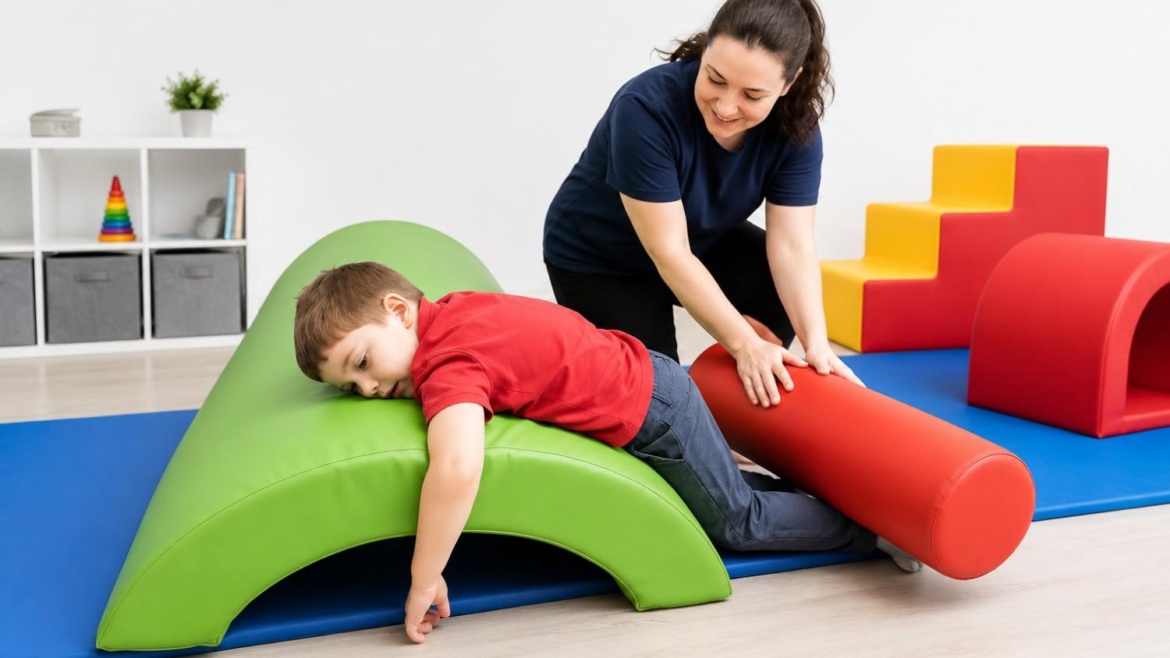
- If it’s primarily sensory, therapy focuses on regulating the nervous system through structured, play-based sensory input- swinging, deep pressure, textured play, and movement-based activities
- If it overlaps with autism, therapy is broadened to include social communication support alongside sensory regulation
- If ADHD is the primary driver, sensory strategies may still help with self-regulation, but attention-focused interventions become a bigger part of the plan
This is why “one-size-fits-all” advice from forums or well-meaning relatives rarely works- the right plan depends entirely on what’s actually driving the behavior.
Signs It’s Time to Stop Guessing and Get an Evaluation
- Behaviors are affecting daily routines- meals, dressing, school mornings- not just occasional bad days
- You’ve tried general parenting strategies, and nothing seems to help consistently
- Teachers or caregivers have raised concerns independently of you
- Your child seems distressed, not just “difficult,” in certain environments
- You genuinely can’t tell if it’s sensory, attention-related, or something else
If any of this sounds familiar, an evaluation isn’t overreacting- it’s the fastest way to stop guessing and start helping.
Frequently Asked Questions
1. Can a child have both ADHD and sensory processing difficulties?
Yes, the two frequently co-occur. A thorough evaluation looks at both possibilities rather than assuming it’s one or the other.
2. Does sensory processing difficulty always mean autism?
No. Many children have sensory processing difficulties without any autism-related traits. Sensory challenges are common in autism, but they don’t automatically indicate it.
3. How is a sensory evaluation different from an autism evaluation?
A sensory evaluation focuses specifically on how a child responds to touch, sound, and movement. An autism evaluation looks more broadly at communication, social interaction, and behavior patterns, often alongside sensory input.
4. My child’s school suggested ADHD, but I suspect something else. What should I do?
Schools can flag concerns, but they aren’t equipped to diagnose the underlying cause. A professional evaluation gives you clarity instead of a single-perspective label.
5. What if the evaluation shows more than one thing going on?
This is common, and it’s exactly why a coordinated plan matters- addressing sensory regulation alongside any other identified needs, rather than treating them separately.
Get Clarity, Not Just a Label
If you’ve been going back and forth between “maybe it’s ADHD” and “maybe it’s sensory” without real answers, it’s time to stop guessing. Reach out to Paramount Child Development Centre and book a comprehensive evaluation for your child. The right diagnosis isn’t just a label- it’s the starting point for a plan that actually works.