
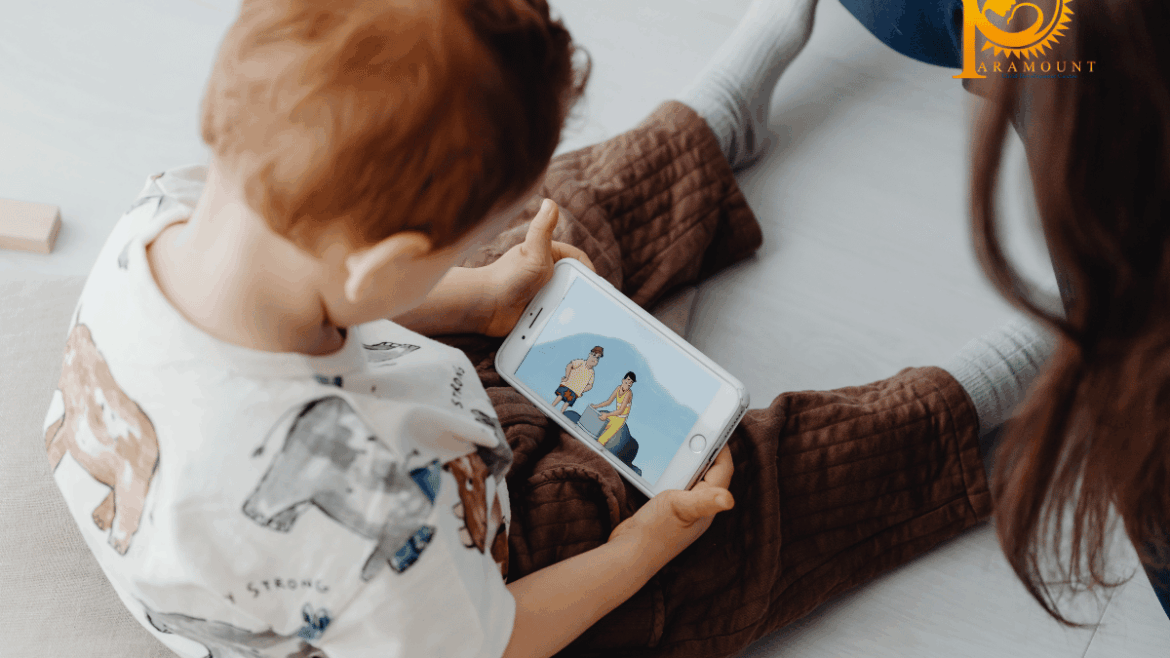
Short answer: Screen time does not on its own cause speech delay, but heavy screen use in the first three years is consistently linked with slower language development. The main reason is simple: time on a screen is time not spent talking, babbling and taking turns with an adult, which is how children learn to speak. Cutting back on screens helps. If your child already shows warning signs, get their speech assessed at the same time rather than waiting.
| Key takeaways The Indian Academy of Pediatrics recommends no screens before age 2, and no more than 1 hour a day from 2 to 5 years, in sessions of 20–30 minutes at most.In a Japanese study of 7,097 children, those with 4+ hours of screen time a day at age 1 had nearly five times the odds of a communication delay at age 2.In an Australian study, every extra minute of screen time at age 3 meant children heard fewer words and spoke less.Screens do not cause autism. Heavy screen use can produce speech and attention difficulties that look similar, and only an assessment tells them apart.Reducing screens and booking an assessment are not either/or. If there are warning signs, do both. |
Why so many parents are asking this
A phone at mealtimes so the child eats. Rhymes on YouTube to calm a tantrum. A tablet at a relative’s house or a restaurant so the adults can talk. None of these feel like a big decision on the day, and most families start for practical reasons.
Across ten Indian studies, children under five average 2.22 hours of screen time a day, more than twice the recommended maximum. So when a two-year-old has only a handful of words, “is it the phone?” is usually the first question parents ask us. It is a fair question, and the research gives a fairly clear answer.
What the research actually shows
Study 1: More screen time at age 1, more communication delay at ages 2 and 4
A 2023 study in JAMA Pediatrics followed 7,097 children in Japan. Compared with children who had less than one hour of screen time a day at age 1, the odds of a communication delay at age 2 rose with every step up in screen time:
| Screen time at age 1 | Odds of communication delay at age 2 | Odds at age 4 |
| Less than 1 hour/day | Baseline | Baseline |
| 1 to 2 hours/day | 1.6 times higher | Not significantly higher |
| 2 to 4 hours/day | 2.0 times higher | 1.6 times higher |
| 4 hours/day or more | 4.8 times higher | 2.7 times higher |
Study 2: Each minute of screen time means less talk at home
A 2024 Australian study, also in JAMA Pediatrics, recorded the real sounds in 220 family homes for up to 16 hours a day using small audio recorders worn by toddlers. At age 3, every extra minute of screen time was linked to 6.6 fewer adult words heard, 4.9 fewer sounds or words from the child, and 1.1 fewer back-and-forth exchanges between child and adult. The three-year-olds in the study averaged almost three hours of screen time a day.
What these studies do and don’t prove
Both studies show a link, not proof that screens cause delay. Children who are already struggling may be given more screen time to keep them calm, and busy households differ in many ways. But the direction of the evidence is consistent across countries, and it is why paediatric bodies in India and worldwide set strict limits for young children.
Why screens get in the way of learning to talk
- A video cannot wait for your child. Children learn language through back-and-forth: they make a sound, you respond, they try again. A screen keeps talking whether your child answers or not.
- Screen time replaces talk time. An hour on a phone is an hour without the everyday conversation that builds vocabulary: naming food, describing what you’re doing, answering a babble.
- Background TV counts. A TV left on in the room cuts how much adults talk to the child, even when nobody is watching it.
- Adult phones count too. When parents are on their own phones, they talk to their child less. Researchers call this “technoference”.
- Real life feels slow by comparison. Fast, bright, constantly changing content can make a picture book or a game of blocks feel dull, and those slower activities are where most talking happens.
Does screen time cause autism?
No. Autism is a neurodevelopmental difference with a strong genetic component, and screens do not cause it. Two things, though, make the question understandable:
- Very heavy screen use can lead to delayed speech, less eye contact and weaker response to name, which overlap with early signs of autism. Online, this is often called “virtual autism”. That is a popular label, not a medical diagnosis.
- Many autistic children are strongly drawn to screens, so a screen-heavy routine can be a result of how a child is wired, not the cause.
The table below is a rough guide, not a diagnosis:
| Signs that often improve with less screen time and more interaction | Signs that need an assessment regardless of screen time |
| Speech is behind, but your child points to show you things | No pointing to share interest by around 18 months |
| Brings you toys, enjoys peekaboo and copies your actions | Rarely responds to their name, even away from screens |
| Responds to name and looks at you when the screen is off | Has lost words or skills they used to have |
| Clear change within a few weeks of more talk and play | Repetitive movements, lining up objects, or very strong reactions to noise or touch |
| Interested in other children, even without words | Little interest in people; prefers objects or screens almost all the time |
If anything in the right-hand column sounds familiar, reduce screens and book an assessment at the same time. Don’t run a three-month “screen detox” experiment first. Our guide to the early signs of autism goes through these signs age by age.
How much screen time is safe? Limits by age
| Age | Indian Academy of Pediatrics (2022) | World Health Organization (2019) |
| Under 1 year | No screens | Not recommended |
| 1 to 2 years | No screens | Not recommended at age 1; at age 2, no more than 1 hour a day |
| 2 to 5 years | Maximum 1 hour a day, sessions of 20–30 minutes; less is better | No more than 1 hour a day (ages 2–4); less is better |
| 5 to 10 years | Less than 2 hours a day; less is better | — |
How to cut screen time without daily battles
- Start with mealtimes. Mealtime is one of the best talking times of the day. Sit with your child, name the food, talk about colours and tastes. Your child may eat a little less for the first few days while the new routine settles.
- Switch off the background TV. If nobody is actively watching, turn it off.
- Replace, don’t just remove. Have a short list of go-to alternatives ready: rhymes you sing with actions, picture books, pouring water between katoris, stacking steel glasses, a walk around the colony or park.
- Get the whole household on the same plan. Grandparents, house help and older siblings need to know the plan, or the phone simply moves to another room.
- If you keep some screen time (age 2 and above), make it shared. Watch with your child, choose slow-paced content, pause and talk about what you see, and avoid screens in the hour before bed.
- Watch your own phone. Keep it away during play, meals and bath time. Your attention is what your child is learning from.
- Expect protest at first. The first week or two is usually the hardest. Stay calm and consistent; it settles.
Five talking habits that build language every day
- Narrate: describe what you are doing as you do it. “Mummy is cutting the apple. Cut, cut, cut.”
- Pause and wait: after you speak, count silently to five. Give your child room to respond with a sound, gesture or word.
- Add one word: if your child says “ball”, say “big ball” or “red ball”.
- Offer choices: “Milk or water?” while holding both up. It gives your child a reason to communicate.
- Follow their lead: talk about what your child is already looking at or playing with, not what you want them to look at.
These are the same strategies our speech therapists coach parents to use at home. Most children’s progress happens in these everyday moments, not only in the therapy room.
When to get your child’s speech checked
Book a speech and language assessment if your child:
- is not babbling, pointing or responding to their name by 12 months
- has no single words by 16 months
- is not joining two words together (“more milk”, “papa come”), or has fewer than about 50 words, by 24 months
- is hard for people outside the family to understand by 3 years
- does not seem to understand simple instructions such as “give me the cup”
- at any age, loses words or skills they used to have. Don’t wait; see someone promptly.
Our speech therapy in Jaipur page includes a guide to how much of your child’s speech a stranger should be able to understand at each age. If you’re not sure whether your child needs speech therapy, occupational therapy or both, read occupational therapy vs speech therapy: which does my child need?
How Paramount CDC helps
At our centres in Durgapura, Jaipur and on Silver Jubilee Road, Sikar, a speech assessment starts with a conversation about your child’s history, routine and screen use. It continues with play-based observation of how your child understands, communicates and interacts. We check whether a hearing test is needed, look at attention and sensory needs alongside speech, and finish with a plain-language explanation and a written plan.
Where therapy is needed, our speech-language pathologists work only with children. We coach you in the talking strategies above so progress continues at home. If the picture suggests autism or another developmental condition, we work alongside your child’s paediatrician or a developmental specialist, who makes any formal diagnosis. Learn more about speech therapy in Sikar and our autism therapy centre in Jaipur.
A word for parents feeling guilty
If you handed your child a phone so you could cook, work or get through a long day, you are in very good company, and you have not damaged your child. Young children’s brains are remarkably adaptable, and many late talkers catch up once they get more conversation and, where needed, the right support. The best time to make a change is now, and it starts with small, ordinary moments of talking together.
Frequently asked questions
Can using a mobile phone cause speech delay in toddlers?
Research consistently links heavy screen use before age 3 with slower language development, but screens have not been proven to be the single cause. They mostly hold speech back by replacing the talking, play and back-and-forth that children need to learn language. Cutting screen time and increasing everyday conversation is one of the most useful things a family can do.
Does screen time cause autism?
No. Autism is a neurodevelopmental difference with a strong genetic component, and screens do not cause it. Heavy screen use can, however, lead to speech and attention difficulties that look similar to early signs of autism, which is why a developmental assessment is the only reliable way to tell them apart.
What is “virtual autism”?
“Virtual autism” is a popular term for autism-like behaviour seen in young children with very heavy screen exposure. It is not a recognised medical diagnosis. If your child shows autism-like signs, reduce screens and book a developmental assessment at the same time, rather than waiting to see whether the signs disappear.
How much screen time is safe for a 2-year-old?
The Indian Academy of Pediatrics recommends no screens before age 2, and a maximum of one hour a day between ages 2 and 5, in sessions of no more than 20 to 30 minutes. Less is better, and watching together with an adult is better than watching alone.
Are nursery rhymes and educational videos okay for toddlers?
They still count as screen time. Toddlers learn far more when a person sings the rhyme with them, with actions, pauses and eye contact, than when they watch it on a screen. If you use videos, watch together, sing along and stay within the age limits.
Do video calls with grandparents count as screen time?
Live video calls are different from watching videos because a real person responds to your child. The American Academy of Pediatrics makes an exception for video chatting even for children under 18 months. Keep calls short and interactive.
Will my child start talking once we stop screens?
Many children use more sounds and words once screens are reduced and adults talk and play with them more. But if your child has other warning signs, or you see no clear progress within a few weeks, get a speech assessment. Some children need therapy as well as a change in routine.
Where can I get my child’s speech assessed in Jaipur or Sikar?
Paramount Child Development Centre assesses speech and language development at its Durgapura centre in Jaipur (1st Floor, 10 Tonk Road, opposite BMW Showroom) and its Sikar centre (2nd Floor, Savigo Tower, Silver Jubilee Road). Call +91 6376 345 510 to book an assessment.
Book a speech assessment in Jaipur or Sikar
If something in this article sounded like your child, bring it to us. One assessment either reassures you or gives you a clear plan, and both are better than another six months of wondering.
Jaipur: 1st Floor, 10 Tonk Road, opposite BMW Showroom, Kailash Puri Colony, Durgapura, Jaipur 302015. Monday to Saturday, 10:00 to 19:30.
Sikar: 2nd Floor, Savigo Tower (above Tanishq & LG Showroom), opposite Police Line, Silver Jubilee Road, Sikar 332001.
Call or WhatsApp: +91 6376 345 510 · Book an assessment
This article is for general information and does not replace an individual assessment by a qualified professional. If you are concerned about your child’s speech or development, please speak to a speech-language pathologist or your paediatrician.

1 Comment
Comments are closed.